
Even experienced swing traders leave money on the table because of a handful of repeatable, avoidable errors. It is rarely a flawed strategy that kills a trading account. More often, it is the small behavioral slips: skipping a plan, sizing positions too large, or chasing a stock that already moved. Swing traders commonly lack a clear trading plan, and that single gap opens the door to every other mistake on this list. This article breaks down the most costly swing trading mistakes, backs each one with real evidence, and gives you practical fixes you can apply to your next trade.
Table of Contents
- Lack of a clear plan and emotional trading
- Poor risk management and position sizing
- Overtrading and chasing hot stocks
- Failing to adapt, review, and consider market context
- Why most swing traders repeat the same mistakes (and how to break the cycle))
- Enhance your swing trading with smart tools
- Frequently asked questions
Key Takeaways
| Point | Details |
|---|---|
| Structure trading plan | A well-defined plan reduces emotional and impulsive trades, increasing consistency. |
| Apply strict risk controls | Never risk more than 1-2% of capital per trade to protect your account. |
| Avoid overtrading | Frequent trading and chasing tips raises costs and leads to poor decision-making. |
| Review and adapt | Evaluate every trade and adjust strategies to fit changing markets. |
| Embrace data-driven insights | Use journals and structured reviews to continuously learn and improve your swing trading results. |
Lack of a clear plan and emotional trading
A written trading plan is not just a formality. It is the single most effective tool for keeping emotion out of your decisions. Without one, every trade becomes a judgment call made under pressure, and pressure is where discipline breaks down fastest.
Letting emotions drive decisions instead of a structured plan is one of the most cited reasons traders underperform. The fix is straightforward: write your rules down before the market opens, not during the trade.
A solid plan covers these five elements before you ever click "buy":
- Setup criteria: What pattern or signal triggers your interest?
- Entry signal: What confirms the move is real, not noise?
- Stop-loss level: Where does the trade prove you wrong?
- Profit target: Where do you exit with a win?
- Catalyst check: Is there a news event or earnings date that could disrupt the setup?
This is essentially the 5-step trade test that filters out low-probability setups before they cost you real money. If a trade does not pass all five, you skip it. No exceptions.
"A plan that lives in your head is not a plan. It is a wish."
Pro Tip: Log every trade with your pre-trade reasoning in a journal. Reviewing your trade journal insights over time reveals exactly which emotional triggers cause you to break your own rules, so you can address them directly.
With an understanding of how lack of planning leads to costly errors, let's examine another critical mistake: mishandling risk.
Poor risk management and position sizing
You can have the best setup in the world and still blow up your account if your position size is wrong. Risk management is not exciting, but it is the single factor that separates traders who survive long-term from those who do not.

Risking more than 1-2% of capital per trade, or skipping stop-losses entirely, results in losses that are simply too large to recover from quickly. A string of five losing trades at 10% risk each can cut your account nearly in half.
High win-rate strategies of 70-80% are achievable, but they still require cutting losses quickly. Even a 75% win rate fails if your average loss is three times your average win.
Here is a quick comparison of poor versus proper position sizing:
| Scenario | Account size | Risk per trade | Loss on 5 bad trades |
|---|---|---|---|
| Poor sizing | $10,000 | 10% ($1,000) | $5,000 (50% drawdown) |
| Proper sizing | $10,000 | 1.5% ($150) | $750 (7.5% drawdown) |
The difference is stark. A 50% drawdown requires a 100% gain just to break even. A 7.5% drawdown is recoverable within weeks of disciplined trading.
Key habits to lock in your risk management standards:
- Set your stop-loss before entering, not after
- Aim for a minimum 1:2 risk-to-reward ratio on every trade
- Never add to a losing position to "average down"
- Use a simple trading journal to track your actual risk per trade versus your intended risk
Pro Tip: Calculate your position size before placing the order. Divide your maximum dollar risk (1-2% of account) by the distance between your entry and stop-loss. That number is your share count. It removes guesswork completely.
Risk management is only part of the equation; other mistakes can erode performance even if your sizing is perfect.
Overtrading and chasing hot stocks
Overtrading is one of the quietest account killers in swing trading. It does not feel like a mistake in the moment. It feels like hustle. But the data tells a different story.
Overtrading increases transaction costs, risk exposure, and emotional burnout. Every unnecessary trade adds friction: commissions, spreads, and the mental energy spent managing a position that never had a strong setup in the first place.
Chasing hot stocks is the close cousin of overtrading. Entering after the move has occurred is one of the most common ways traders buy the top and then watch a stock reverse on them immediately. By the time a stock is trending on social media or financial news, the smart money has already entered.
Here is how disciplined trading compares to impulsive trading over time:
| Behavior | Trades per month | Avg. win rate | Net outcome |
|---|---|---|---|
| Disciplined trader | 8-12 | 55-65% | Steady account growth |
| Impulsive trader | 30+ | 35-45% | Account erosion + burnout |
The disciplined trader wins not by being smarter, but by being selective. Fewer, higher-quality trades beat a high volume of mediocre ones every time.
Strategies to avoid the overtrading consequences trap:
- Set a weekly trade limit and stick to it
- Only trade setups that meet all your pre-defined criteria
- If you feel the urge to trade out of boredom, step away from the screen
- Ignore tips, trending tickers, and social media hype during trading hours
Statistic to remember: Studies consistently show that traders who execute fewer, more selective trades outperform high-frequency retail traders over rolling 12-month periods. Quality beats quantity, every single time.
Beyond trade frequency, adapting to changing market conditions and reviewing trades can further elevate your results.
Failing to adapt, review, and consider market context
A strategy that crushes it in a trending bull market can destroy your account in a choppy, sideways market. Failing to adapt to changing market conditions, like applying trend-following strategies during a range-bound market, is a mistake that even experienced traders make repeatedly.
In bear markets, shortening hold periods, holding more cash, or using options for downside protection are all legitimate market condition adaptations that protect your account when conditions shift.
"The market does not care about your favorite setup. It rewards traders who read the environment and adjust."
Neglecting post-trade review is equally damaging. Without reviewing your trades, you repeat the same errors indefinitely. Growth in trading is almost entirely driven by honest self-assessment.
Here is a simple review routine you can build into your weekly schedule:
- Log every trade with entry, exit, and the reasoning behind it
- Categorize outcomes as planned wins, planned losses, or unplanned deviations
- Identify patterns in your losing trades: same time of day, same market condition, same emotional state?
- Adjust one rule in your plan based on what the data shows
- Track your monitoring market context metrics: how often did your trades align with the broader market trend?
Pro Tip: Spend more time reviewing your losing trades than your winning ones. Wins feel good but teach you little. Losses contain the specific information you need to improve.
Now that we've detailed common mistakes and their fixes, let's share some unique perspective from years of trading experience.
Why most swing traders repeat the same mistakes (and how to break the cycle)
Here is the uncomfortable truth: most traders already know these rules. They know they should not overtrade. They know they need a plan. They know risk management matters. And yet they keep breaking the same rules, over and over.
The problem is not knowledge. It is habit. The brain defaults to familiar patterns under stress, and trading is inherently stressful. Knowing a rule intellectually does not mean your nervous system will follow it when a stock gaps up 8% and you feel like you are missing out.
The 5-step trade test works not because it is complicated, but because it forces a pause. That pause is where discipline lives.
The traders who actually break the cycle are not the ones who read more books. They are the ones who build structured routines: pre-market checklists, post-trade journaling, weekly reviews. They treat breaking trading cycles as a system design problem, not a willpower problem.
Here is the contrarian insight most articles skip: reviewing your losses more frequently than your wins accelerates improvement faster than any strategy course. Losses contain the exact behavioral data you need to rewire your habits. Wins mostly confirm what you already do well.
Enhance your swing trading with smart tools
Knowing what mistakes to avoid is only half the battle. The other half is having a system that makes it easy to track, review, and improve your trading behavior consistently.
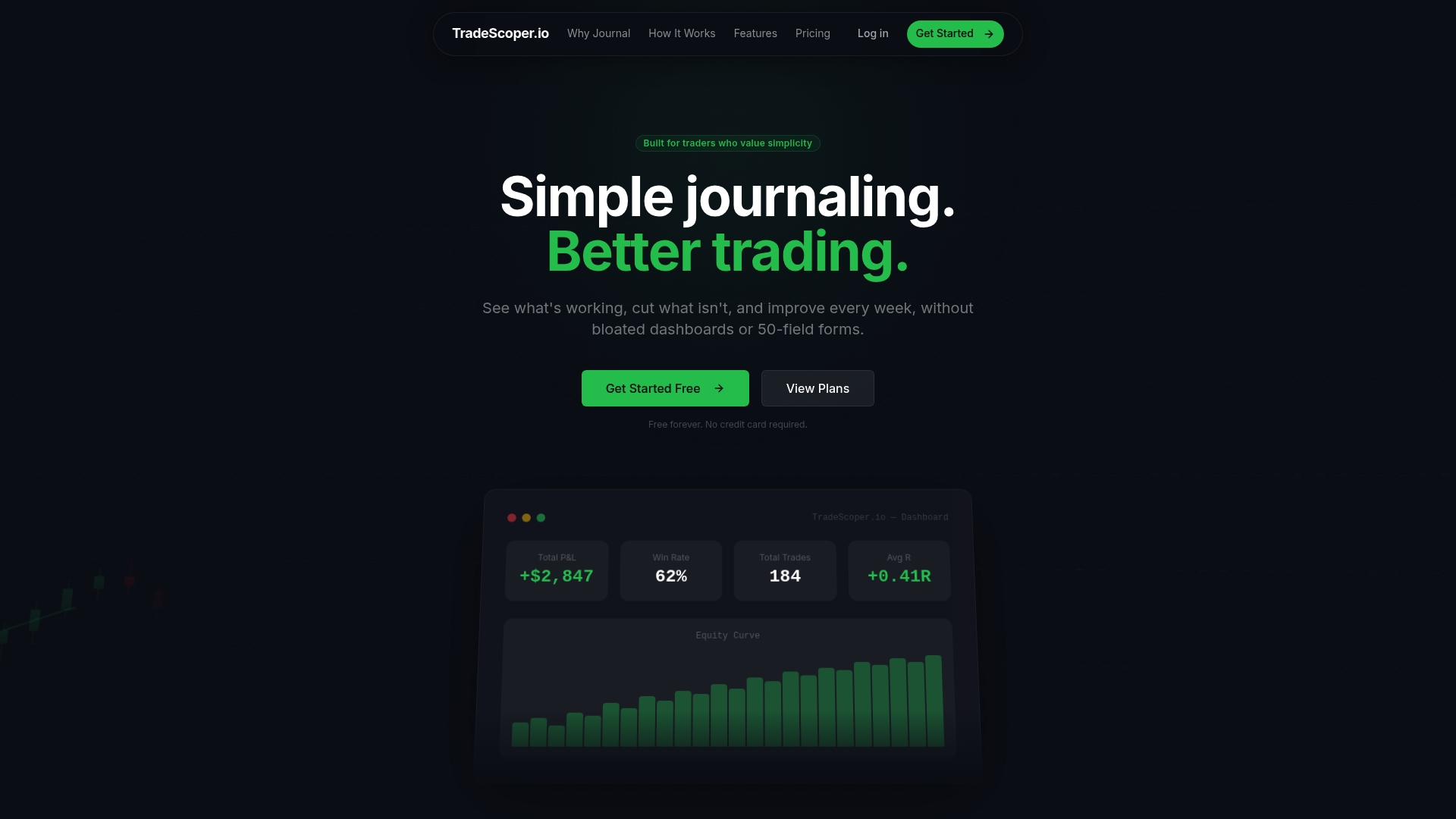
TradeScoper.io is built specifically for traders who want to stop repeating costly errors. With fast trade logging, AI-powered pattern analysis, and detailed performance dashboards, you can see exactly where your edge is strong and where it is leaking profits. Use TradeWise for smarter trading to log your trades, review your behavioral patterns, and get actionable insights without wading through cluttered data. Sign up for free, start logging your trades today, and let the data show you what your gut has been missing.
Frequently asked questions
What is the most common mistake swing traders make?
Lacking a clear trading plan is the most common mistake, as it leads directly to emotional and impulsive decisions that override sound strategy.
How much capital should you risk per swing trade?
Risk no more than 1-2% of your capital per trade; this limit keeps individual losses small enough to recover from without derailing your overall account.
Does reviewing past trades really help reduce mistakes?
Yes, post-trade review is one of the fastest ways to identify recurring errors and refine your strategy for more consistent results going forward.
How can I avoid chasing hot stocks when swing trading?
Stick strictly to your setup criteria and wait for a confirmed entry signal; entering after the move has already happened is a reliable way to buy the top and absorb the reversal.