TL;DR:
- Most day traders lose money due to poor risk management and emotional biases.
- Successful traders rely on data-driven strategies, disciplined risk control, and regular journaling.
- Building a consistent process and using AI tools can significantly improve trading performance.
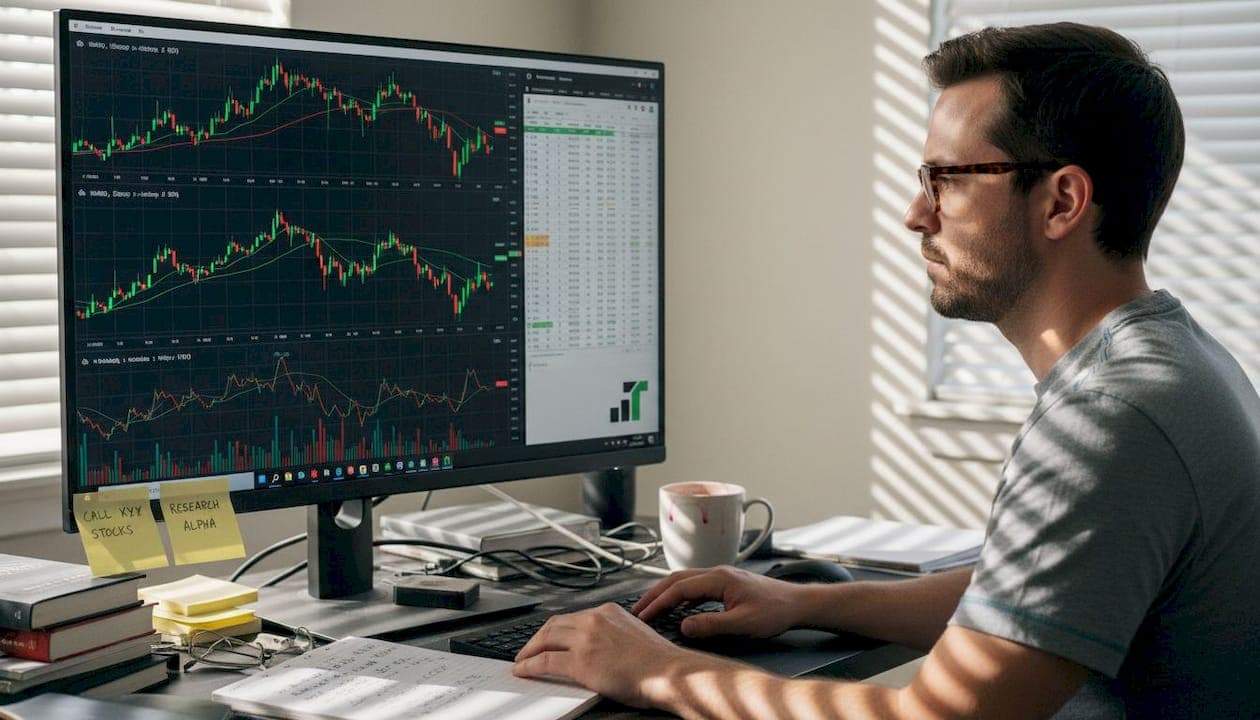
Most day traders never make it past their first year with their account intact. 90-97% of day traders lose money over time, and only a small fraction ever reach consistent profitability. That number isn't meant to scare you off. It's meant to reframe how you approach the craft. The traders who survive and thrive aren't necessarily smarter or luckier. They follow a process. They track data, manage risk with discipline, and treat psychology as seriously as strategy. This guide breaks down the core practices that separate the profitable minority from the rest, with actionable steps you can apply starting today.
Table of Contents
- Analyze your edge: using data to guide every trade
- Master risk management: protecting your capital above all
- Track your performance: the power of trade journaling
- Control emotions and avoid common psychological traps
- Why most 'hot tips' fail and what really works in 2026
- Take your day trading to the next level
- Frequently asked questions
Key Takeaways
| Point | Details |
|---|---|
| Quantify your trading edge | Use data and backtesting to define and measure your advantage before risking capital. |
| Strict risk management | Position sizing and stop-losses are non-negotiable to survive long enough to succeed. |
| Leverage trade journaling | Consistent tracking and review of trades is essential to continuous improvement. |
| Master trading psychology | Discipline and emotional control separate winners from losers in day trading. |
| Adopt performance tools | AI-powered journals and analytics give traders an actionable performance edge. |
Analyze your edge: using data to guide every trade
In day trading, your "edge" is any repeatable advantage that makes your strategy profitable over a large sample of trades. It's not a feeling or a hunch. It's a measurable, statistically validated pattern. Without a defined edge, you're essentially gambling with extra steps.
The two most important metrics for measuring edge are win rate and risk/reward ratio. Win rate alone tells you nothing useful. A trader who wins 70% of the time but loses three times their average gain on every losing trade is bleeding money. The combination of both metrics gives you expectancy, which is the average amount you expect to make per trade. Positive expectancy is what a real edge looks like.
| Metric | What it measures | Target range |
|---|---|---|
| Win rate | % of trades that close in profit | 40-60% (strategy-dependent) |
| Risk/reward ratio | Average gain vs. average loss | 1.5:1 minimum |
| Expectancy | Average profit per trade | Positive value |
| Max drawdown | Largest peak-to-trough loss | Below 20% |
Backtesting is how you validate your edge before risking real capital. Run your strategy against at least 100 historical trades across different market conditions. Look for consistency, not perfection. A strategy that performs well in trending markets but collapses in ranging ones isn't truly robust. Empirical data consistently shows that traders who skip backtesting and journaling face dramatically higher failure rates.
Key metrics to track from day one:
- Entry and exit prices
- Setup type (breakout, reversal, momentum)
- Time of day and session
- Win/loss outcome and dollar amount
- Emotional state at entry
Pro Tip: Don't rely on memory to track your trades. Use trading journal tools that automatically calculate expectancy, win rate, and drawdown so you can see your edge clearly without manual math.
Master risk management: protecting your capital above all
With your edge defined, the next critical skill is safeguarding your capital through disciplined risk management. Even the best strategy will hit losing streaks. Your job is to survive them.
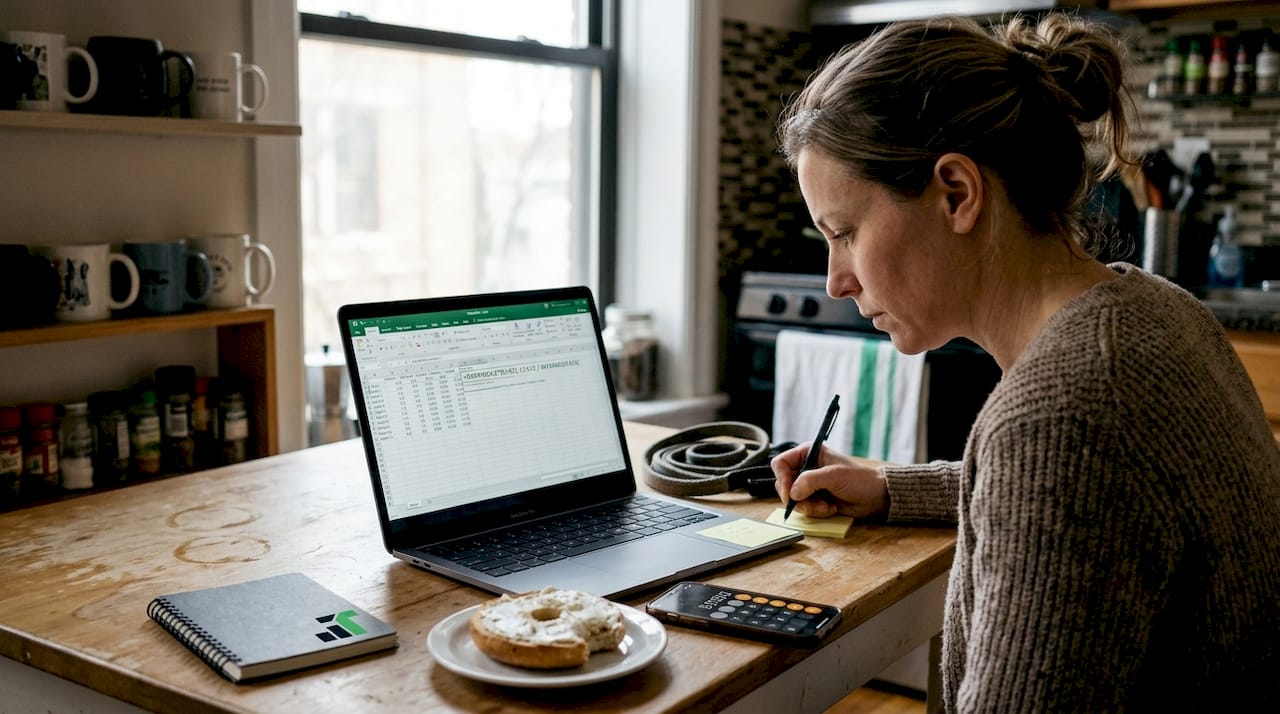
The 1-2% rule is the foundation. Never risk more than 1-2% of your total account on a single trade. On a $10,000 account, that's $100-$200 per trade. It sounds conservative, but it's what keeps a string of losses from wiping out months of gains. 70-90% of retail day traders lose money, and the pattern is almost always the same: oversized positions during losing streaks.
| Approach | Risk per trade | Best for | Drawback |
|---|---|---|---|
| Fixed percentage | 1-2% of account | Most traders | Requires discipline |
| Fixed dollar amount | Set $ per trade | Beginners | Doesn't scale with account |
| Volatility-based | Adjusted for ATR | Advanced traders | More complex to calculate |
| Kelly Criterion | Formula-based | Quantitative traders | Can be aggressive |
For advanced risk practices, volatility-based sizing adjusts your position based on how much a market is moving. When volatility spikes, your position shrinks automatically, protecting you from outsized losses.
Five habits that prevent catastrophic losses:
- Set your stop-loss before entering any trade, not after.
- Never move a stop-loss further away to "give the trade more room."
- Cap your daily loss limit at 3-5% of your account.
- Reduce position size after two consecutive losses.
- Step away from the screen after hitting your daily loss limit.
Pro Tip: Place stop-loss orders at technically significant levels, like below a support zone or above a resistance level, rather than at arbitrary dollar amounts. This makes your stops harder to trigger randomly and more meaningful strategically.
Track your performance: the power of trade journaling
Managing risk is ongoing, but your next major breakthrough often comes from looking inward at your own trading data. A trade journal is the single most underused tool in a retail trader's toolkit.
Most traders skip journaling because it feels tedious. But without it, you're flying blind. You might sense that you trade better in the morning or that you lose money on Fridays, but without data, those are just guesses. A journal turns guesses into facts.
Every journal entry should include:
- Date, time, and market traded
- Entry and exit price
- Position size and dollar risk
- Setup rationale (why you took the trade)
- Outcome in dollars and percentage
- Emotional state before and during the trade
- What you would do differently
"The traders who improve fastest aren't the ones with the best strategies. They're the ones who review their mistakes most honestly and systematically." This is the core insight that separates developing traders from stagnant ones.
Digital journaling platforms go further than a spreadsheet. They automatically calculate performance by setup type, session, day of week, and emotional state. That means you can quickly see that your breakout trades are profitable but your reversal trades are dragging down your overall results. Empirical data reinforces that journaling and consistent review are among the strongest predictors of long-term trading improvement.
Platforms built for simple trading journaling let you log trades in seconds, without filling out long forms, so the habit actually sticks.
Pro Tip: Block 30 minutes every Sunday to review the past week's trades. Look for patterns in your worst trades. You'll often find the same mistake repeating in different disguises.
Control emotions and avoid common psychological traps
Understanding your trading habits is crucial, but mastering your mindset is the ultimate differentiator. Strategy and risk management can be learned. Emotional discipline is harder to build and easier to lose.
Three psychological traps destroy more accounts than bad strategies ever will:
Revenge trading happens after a loss. You feel the urge to immediately take another trade to "win it back." The problem is that this trade is driven by emotion, not your edge, and it usually makes things worse.
FOMO (fear of missing out) pushes you into trades after the move has already happened. You see a stock running and jump in late, turning a potential winner into a guaranteed loser.
Confirmation bias makes you look for reasons to take a trade you've already decided on, while ignoring signals that say the opposite. You see what you want to see, not what the chart is actually showing.
The average day trader nets roughly -36% annually after fees. Psychology and poor risk management are the primary drivers of that number, not a lack of strategy knowledge.
Science-backed habits for staying disciplined:
- Build a pre-market routine: review the economic calendar, set your watchlist, and define your max loss for the day.
- Use a trading checklist before every entry to confirm your setup meets all criteria.
- Practice mindfulness or box breathing to reset after a loss before taking another trade.
- Keep a "no-trade" log for setups you passed on and review whether your discipline paid off.
- Set price alerts so the market notifies you instead of you watching every tick.
Pro Tip: Write your trading plan the night before. When you already know exactly what you're looking for, emotional decisions in the heat of the moment become much easier to avoid. Structured approaches used by professional traders almost always include pre-defined rules that remove real-time guesswork.
Why most 'hot tips' fail and what really works in 2026
Here's the uncomfortable reality: the trading industry profits from selling you the idea that a better indicator, a hotter alert service, or a new strategy will change everything. It won't. The average day trader still nets -36% annually after fees, with a median loss of $750 per year. That number hasn't changed much despite the explosion of trading tools and education.
What actually works is boring. It's process. It's reviewing your journal every week even when you don't feel like it. It's cutting your position size when you're in a slump instead of doubling down. It's recognizing that your worst trading days share a pattern and then building a system to catch yourself before it happens again.
At TradeScoper.io, we've seen traders transform their results not by finding a secret strategy, but by using AI-powered trading improvement tools to surface patterns they couldn't see manually. The traders who improve fastest in 2026 are the ones treating their trading like a business: measuring everything, cutting what doesn't work, and doubling down on what does.
Take your day trading to the next level
Ready to transform your trading process and start applying these proven strategies? The gap between knowing and doing is where most traders stay stuck. You now have the framework. What you need next is a system that makes it easy to follow through every single day.
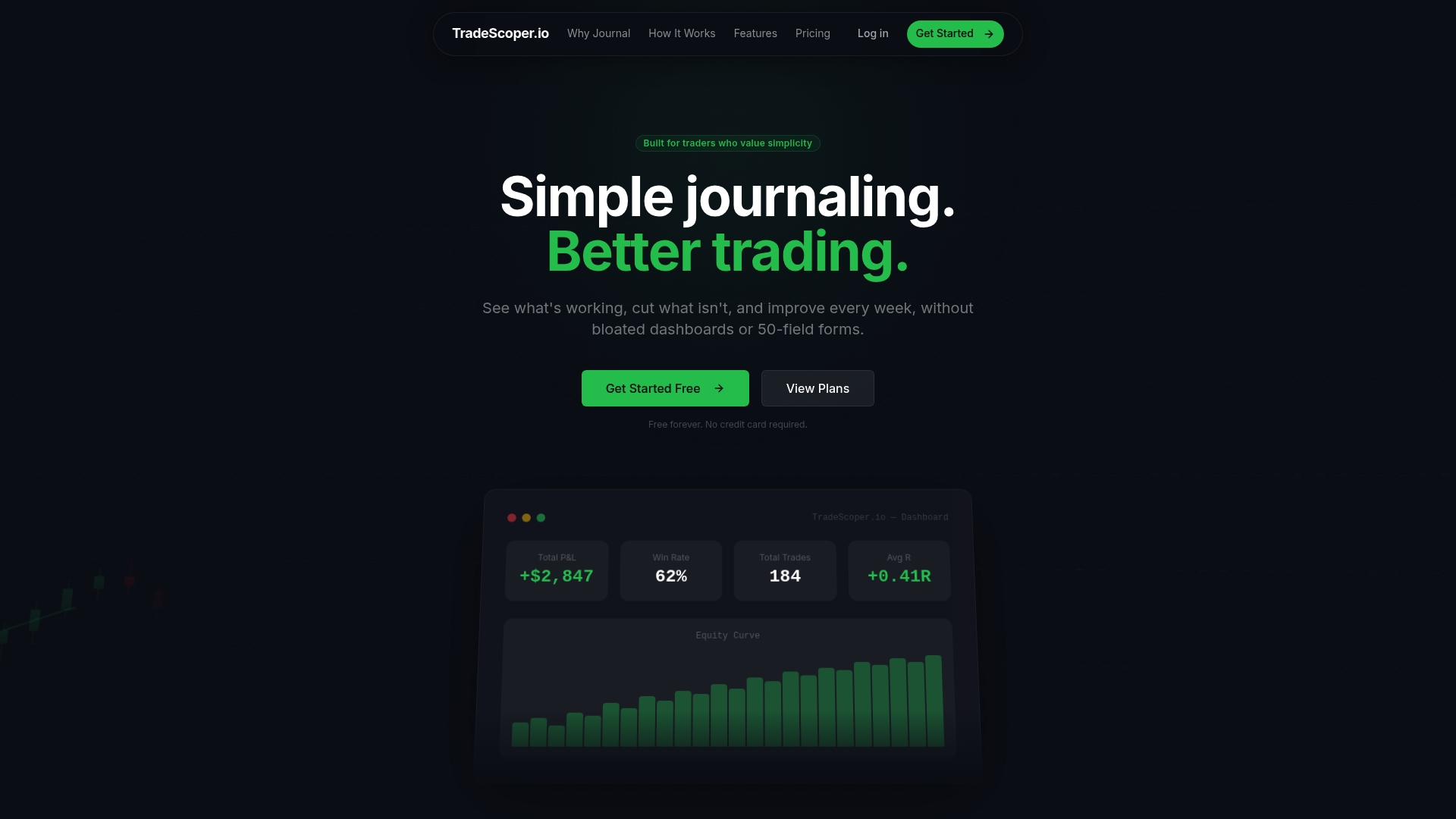
TradeScoper.io is built for exactly this. Log trades in seconds, track your emotional state alongside your P&L, and let the AI trading journal surface the patterns that are costing you money. Whether you're trading forex, crypto, or indices, the platform gives you the analytics to stop guessing and start improving. Start free today and see what your data has been trying to tell you.
Frequently asked questions
What is the biggest reason most day traders lose money?
Most day traders lose money because of poor risk management, emotional decision-making, and the absence of a data-driven strategy. 90-97% of day traders lose money over time, and discipline is the common missing factor.
How can I tell if I have a real trading edge?
A real edge shows up as positive expectancy across a large sample of backtested and live trades. Backtesting and journaling are the only reliable ways to confirm that your strategy has a genuine statistical advantage.
What is a realistic expectation for profits from day trading?
The reality is sobering. The average day trader nets -36% annually after fees, with a median loss of $750 per year. Consistent profitability is possible but requires disciplined process and ongoing performance review.
How often should I review my trading journal?
Review your journal at least once a week. Consistent journaling and review are among the strongest predictors of long-term improvement, helping you catch recurring mistakes before they compound.
Does AI help traders become more profitable?
AI tools can identify patterns across hundreds of trades that would be impossible to spot manually, helping traders refine their strategy, improve timing, and eliminate emotional blind spots faster than traditional review methods.