
TL;DR:
- Day trading demands intense screen time and high capital, with low success rates among retail traders.
- Swing trading offers lower stress, less time commitment, and typically higher profitability for retail traders.
- The best strategy depends on individual personality, schedule, capital, and risk tolerance; discipline is crucial.
Picking the wrong trading style doesn't just hurt your returns. It drains your energy, distorts your decision-making, and quietly erodes your confidence over time. Day trading and swing trading each attract very different types of traders, and the gap between them goes far deeper than timeframes or chart types. One demands your full attention for hours on end. The other rewards patience and strategic thinking. This article breaks down both strategies across the criteria that actually matter, including time, capital, psychology, and real-world success rates, so you can make a smarter, more informed choice about where to focus your edge.
Table of Contents
- How to choose: Key criteria for trading strategies
- Day trading: Pros, cons, and success stats
- Swing trading: Benefits, challenges, and outcomes
- Day trading vs swing trading: Head-to-head comparison
- What most traders get wrong about strategy choice
- Take your trading to the next level
- Frequently asked questions
Key Takeaways
| Point | Details |
|---|---|
| Strategy must match personality | You'll increase your odds by choosing a trading style that suits your temperament and available time. |
| Day trading demands discipline | Success requires rapid decisions, advanced tools, and the emotional stamina to handle high pressure. |
| Swing trading is beginner-friendly | Lower capital requirements and reduced screen time make swing trading accessible for new traders. |
| Success rates favor swing trading | Empirical studies show retail traders perform better using swing trading over day trading. |
| Risk management matters most | Regardless of strategy, tracking trades and managing risk is the biggest determinant of long-term profitability. |
How to choose: Key criteria for trading strategies
Now that we've set the stage, let's look at what really matters when you pick a trading style. Most traders jump straight into a method because it looks exciting or because someone online made it seem effortless. That's a mistake. Choosing a strategy should start with an honest self-assessment across five key dimensions.
- Personality fit: Day trading rewards traders who thrive under pressure, make fast decisions, and can emotionally reset between trades. Swing trading suits those who prefer deliberate analysis, can tolerate uncertainty overnight, and don't need constant feedback to stay engaged.
- Time commitment: Day trading typically demands 6 to 8 hours of active screen time per session. Swing trading can be managed in 30 to 60 minutes per day, making it viable for traders who hold other responsibilities.
- Capital requirements: The Pattern Day Trader (PDT) rule in the U.S. requires a minimum of $25,000 in your account to execute more than three day trades in a five-day period. Swing trading carries no such regulatory minimum.
- Risk tolerance: Day traders face rapid intraday volatility but close positions before the market closes. Swing traders hold overnight, which means news events and gap openings are real risks.
- Skill level: Day trading requires mastery of technical indicators, order flow, and platform execution. Swing trading blends technicals with fundamental analysis, which many traders find more intuitive to learn.
As strategy selection criteria from SmartAsset confirms, there is no universal "better" strategy. The right choice depends on your personality, available time, capital, and risk tolerance. Prioritizing risk management, journaling, and backtesting will always matter more than which style you pick.
Pro Tip: Start a trading journal before you commit to either strategy. Logging your emotional state, reasoning, and outcomes over just a few weeks reveals patterns about your own behavior that no strategy guide can tell you.
Day trading: Pros, cons, and success stats
With your criteria clear, let's dig into what day trading really offers and where it falls short.
Day trading means opening and closing all positions within a single trading session. Traders rely on 1 to 5 minute charts, real-time data feeds, Level 2 quotes, and fast execution platforms. The appeal is obvious: the potential to generate income daily, with no overnight exposure.
Pros of day trading:
- Strong control over position timing and exits
- No overnight gap risk
- Immediate feedback on trade decisions
- High potential return on individual trades
Cons of day trading:
- Requires 8+ hours daily of focused screen time
- The PDT rule demands $25,000 minimum capital in U.S. brokerage accounts
- Emotional fatigue is a serious and underestimated risk
- Steep learning curve with expensive mistakes early on
The statistics here are sobering. 89% of retail CFD day traders lose money according to ESMA 2024 data, and a Cambridge study found day traders average negative 3.8% annual returns. Studies from Brazil and Taiwan put the long-term loss rate between 90% and 97%.
| Metric | Day trading |
|---|---|
| Avg. daily screen time | 6 to 8 hours |
| Min. capital (PDT rule) | $25,000+ |
| Retail profitability rate | Under 10% |
| Avg. annual return (retail) | -3.8% |
As one PhD analyst put it bluntly: "Day trading is a loser's game for most." That's not a knock on the strategy itself. It's a recognition that the infrastructure, discipline, and emotional resilience required are far beyond what most retail traders bring to the table.
Pro Tip: If you're drawn to day trading but don't have $25,000, look into prop trading firms. Many offer funded accounts with structured mentorship, letting you trade larger capital while keeping a share of the profits.
Building emotional discipline is non-negotiable for day traders. Without it, even technically sound setups fall apart under real market pressure.
Swing trading: Benefits, challenges, and outcomes
Next, let's see how swing trading stacks up, especially if you prefer flexibility and longer-term plays.

Swing trading involves holding positions for anywhere from two days to several weeks. Traders use daily and weekly charts, combining technical analysis with fundamental triggers like earnings reports, sector rotation, and macroeconomic shifts. The goal is to capture a meaningful "swing" in price rather than scalping small intraday moves.
Pros of swing trading:
- Flexible schedule with less screen time required
- No PDT rule minimum, making it accessible with smaller accounts
- Slower decision pace reduces emotional burnout
- Combines well with other investment approaches
Cons of swing trading:
- Overnight and weekend holds create gap risk
- Slower feedback loop can make it harder to learn from mistakes quickly
- Requires patience, which many traders underestimate as a skill
The numbers tell a more encouraging story here. A Cambridge study found retail swing traders averaged +2.1% annual returns, a stark contrast to the negative returns seen in day trading data. Institutional day traders do show an 18% return rate, but that figure applies only to the top 10%, not the average participant.
| Metric | Swing trading |
|---|---|
| Typical hold time | 2 days to several weeks |
| Min. capital requirement | No regulatory minimum |
| Retail profitability rate | Higher than day trading |
| Avg. annual return (retail) | +2.1% |
Swing trading also gives you time to research. You can review swing trading performance data from your own history, read earnings reports, and assess sector trends without the clock pressure that defines day trading.
Pro Tip: Use swing trades to diversify risk across your broader portfolio. A swing position in a trending sector can complement longer-term holdings without requiring a full-time commitment to active trading.
Day trading vs swing trading: Head-to-head comparison
With strengths and weaknesses detailed, here's the big picture comparison that brings both strategies together.
This side-by-side view is designed to help you quickly identify where each strategy aligns with your current situation. No single factor should make the decision for you. Look at the full picture.
| Dimension | Day trading | Swing trading |
|---|---|---|
| Timeframe | Intraday (minutes to hours) | Days to weeks |
| Capital needed | $25,000+ (PDT rule) | No regulatory minimum |
| Screen time | 6 to 8 hours daily | 30 to 60 minutes daily |
| Risk type | Intraday volatility | Overnight and gap risk |
| Tools required | Real-time platforms, Level 2 | Charts, fundamentals, news |
| Retail success rate | Under 10% | Higher, avg. +2.1% annually |
| Learning curve | Very steep | Moderate |
According to side-by-side trading comparison data from SmartAsset, day traders rely heavily on short timeframes and technical indicators, while swing traders apply longer holding periods and blend technicals with fundamental analysis. Both require discipline. Neither is passive.
Here are the five questions to ask yourself before choosing:
- Do I have 6 to 8 hours per day to dedicate exclusively to trading?
- Do I have at least $25,000 in capital available for a U.S. brokerage account?
- Can I make fast, high-pressure decisions without second-guessing myself?
- Am I comfortable holding a position overnight without constant monitoring?
- Do I prefer reading charts in real time or analyzing setups the night before?
Your honest answers to these questions will point you toward one strategy more clearly than any comparison table can. Use the data to confirm your instincts, not replace them.
What most traders get wrong about strategy choice
Here's the uncomfortable reality: most traders spend months debating day trading versus swing trading when the actual problem is something else entirely. They're not tracking their decisions. They're not reviewing their losing trades with honesty. They're not building the behavioral awareness that separates profitable traders from the rest.
The strategy you pick matters far less than how rigorously you manage risk and how honestly you review your performance. Prioritizing risk management, journaling, and backtesting consistently outperforms any stylistic preference. A mediocre strategy executed with discipline beats a brilliant strategy executed carelessly every single time.
We've seen traders switch from day trading to swing trading and improve their results overnight. Not because swing trading is inherently better, but because the slower pace gave them space to actually think and review. The real competitive edge isn't your chart setup. It's your trading journaling tools and your willingness to confront what the data says about your own behavior.
Stop optimizing your strategy. Start optimizing your process.
Take your trading to the next level
You now have a clear framework for evaluating day trading and swing trading against your own goals, schedule, and psychology. The next step is putting that knowledge into practice with a system that keeps you accountable.
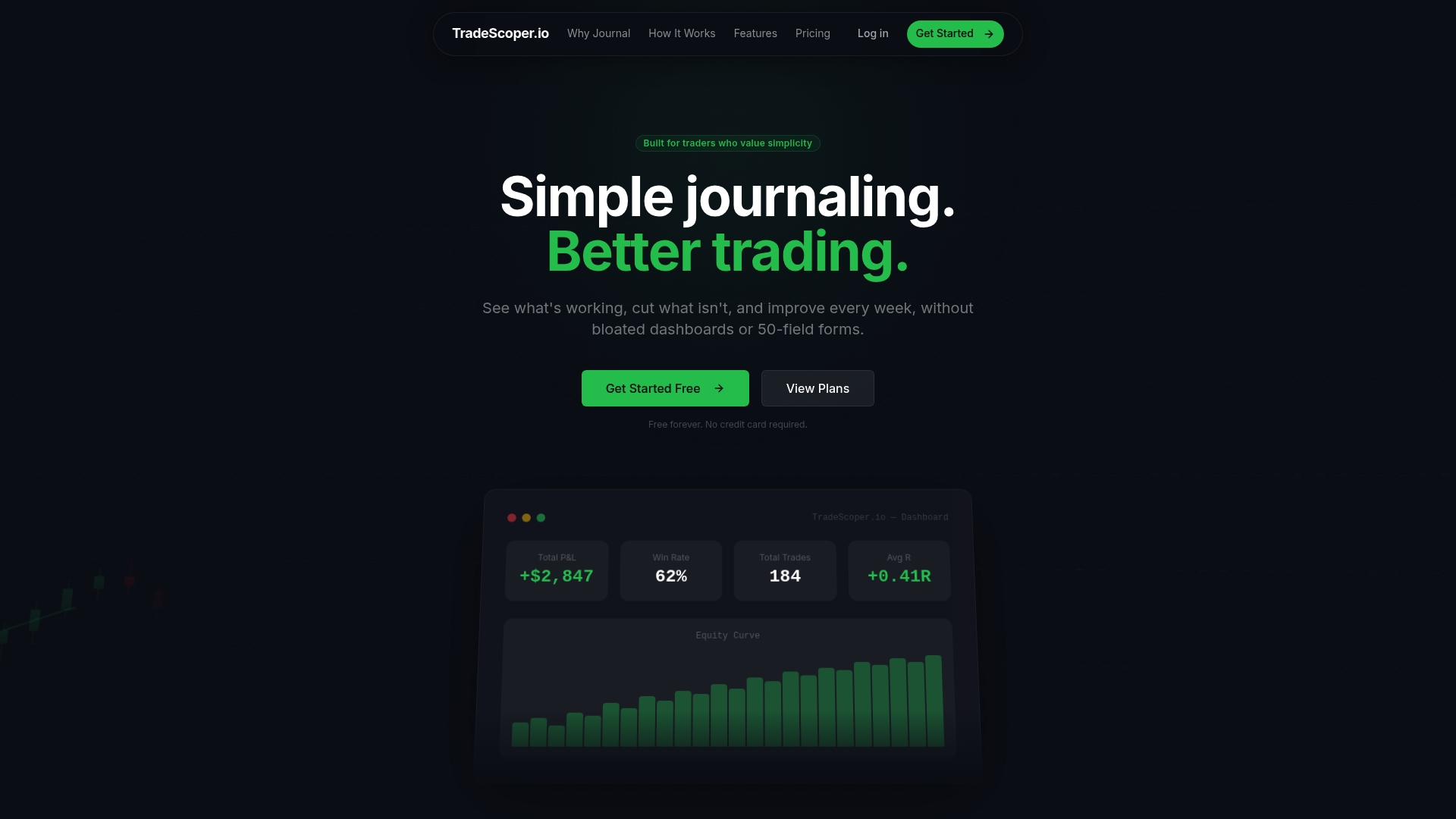
TradeScoper.io gives you a simple trading journal built for traders who want clarity without complexity. Log your trades in seconds, track your emotional state, and let AI-powered analytics surface the patterns in your performance you'd otherwise miss. Whether you're day trading forex or swing trading indices, TradeScoper helps you trade smarter, not just harder. Start free today and see what your data has been trying to tell you.
Frequently asked questions
What is the main difference between day trading and swing trading?
Day trading involves buying and selling within the same session, while swing trading holds positions for days or weeks. Day traders use short timeframes and technical indicators, while swing traders use daily and weekly charts blended with fundamental analysis.
Which trading style is more profitable for retail traders?
Swing trading shows better average outcomes for retail traders based on empirical data. The Cambridge study found swing traders averaged +2.1% annually versus day traders at negative 3.8%.
How much capital do I need to start day trading?
You typically need at least $25,000 to comply with the Pattern Day Trader rule in the U.S. High capital requirements are one of the biggest barriers to entry for retail day traders.
Is swing trading better for beginners?
Swing trading is generally more accessible for beginners because it requires less screen time and has no regulatory capital minimum, giving newer traders room to learn without constant pressure.
Can I combine day trading and swing trading?
Yes, many experienced traders use both approaches to balance their schedule and manage risk. As SmartAsset notes, there is no universal best strategy, and your mix should reflect your personality, time, and capital.